
Zero Gravity Massage Chair Manufacturers in Sonipat
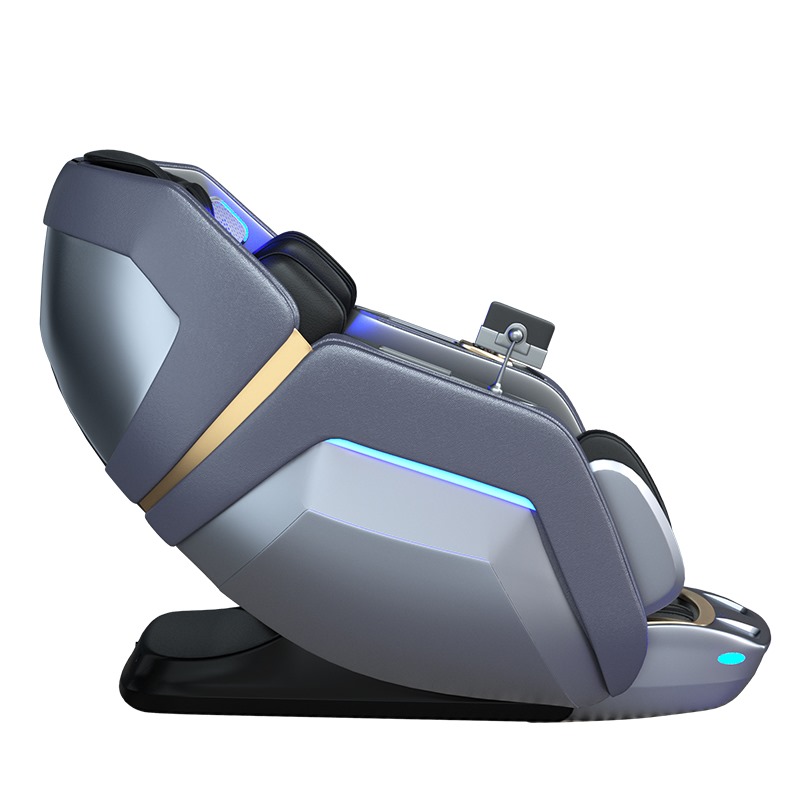
Zero gravity massage chair delivered and installed across Sonipat.
Zero Gravity Massage Chair Manufacturers in Sonipat
Sonipat has become a commuter city. Thousands of its residents leave before dawn for offices and factories in Kundli, Rai, Delhi and the wider NCR belt, sit for hours in traffic on the Rohtak Road and GT Karnal corridors, and come home with a back that has been compressed from breakfast to dinner. Add weekend cricket, gym sessions and long hours at a desk, and the lower back starts complaining long before the body shows any other sign of fatigue.
A zero gravity massage chair treats that pattern differently from an ordinary recliner, because it changes the angle of the body before any roller touches the spine. LVS Massager is a specialist supplier of Zero Gravity Massage Chair Manufacturers in Sonipat, working with SL-track roller systems, 4D mechanisms and multi-stage recline geometry that lifts the knees to the level of the heart.
From a builder floor near Subhash Chowk to a group housing flat in Sector 15 to an independent house in Model Town, our Zero Gravity Massage Chair Manufacturers in Sonipat service covers room measurement, delivery, installation and after-sales coordination across the district.
Book a Free Zero Gravity Demo in Sonipat →Why Buy From a Zero Gravity Specialist Near Sonipat?
“Zero gravity” is one of the most loosely used phrases in the Indian massage chair market. Many chairs sold under that label simply tilt the backrest to 45 degrees and call it a day. A genuine zero gravity chair has to raise the legs too, at a specific angle, or the entire point of the posture is lost.
Our base is at Ghitorni on M.G. Road, on the Delhi side of the border — roughly an hour from Sonipat via the NH-44 and Outer Ring Road — and we regularly deliver, install and support customers across Sonipat district and the Kundli–Rai–Murthal belt. We work consultatively: before recommending anything we ask your height, where the stiffness actually sits, how many people will share the chair, and the exact wall clearance you have for a full recline.
- Feel the angle, not the brochure: Sit in a genuine zero gravity position and compare it with a chair that only reclines. The difference is obvious within thirty seconds.
- Room-first shortlisting: We narrow the models by your real footprint and recline depth, not by the dimensions printed on a spec sheet.
- One local point of contact: Delivery, installation, warranty paperwork and service requests all run through a team you can call directly.
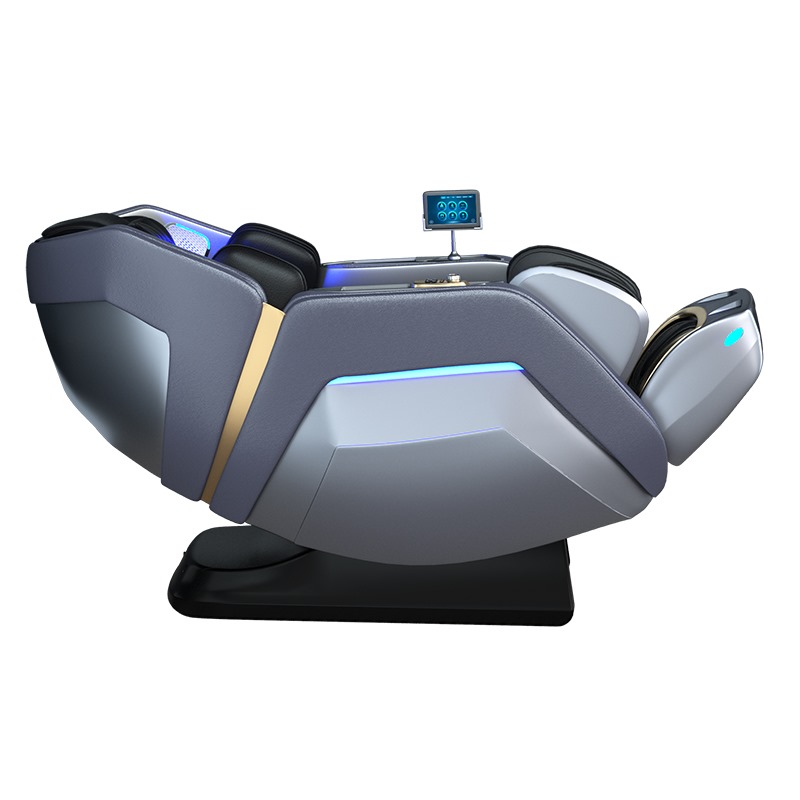
Test the zero gravity recline and leg elevation before you decide.
What Does “Zero Gravity” Actually Mean on a Massage Chair?
The term comes from the neutral body posture studied during spaceflight, where the body settles into a relaxed shape when gravity stops stacking it vertically. On a massage chair, that shape is recreated by reclining the backrest and raising the leg rest until the torso and thighs sit at roughly 126 to 128 degrees and the knees are at or above the level of the heart.
Two things happen in that position. First, the body's weight spreads across the backrest, the seat and the leg rest instead of being stacked through the lumbar discs. Second, the paraspinal muscles — the ones that keep you upright all day — finally switch off. This matters because rollers cannot reach deep tissue through a wall of guarding muscle. Zero gravity removes the guarding first, so the same roller depth feels deeper and less uncomfortable.
A chair that tilts the backrest without lifting the legs is a recliner. It may be pleasant, but it is not zero gravity.
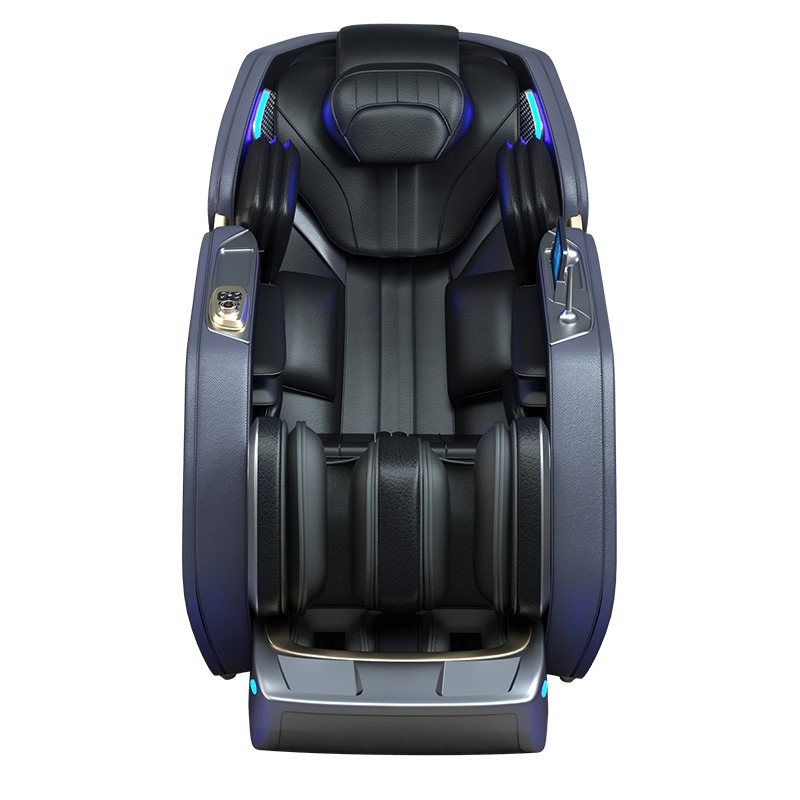
Genuine zero gravity lifts the legs as well as reclining the back — both halves matter.
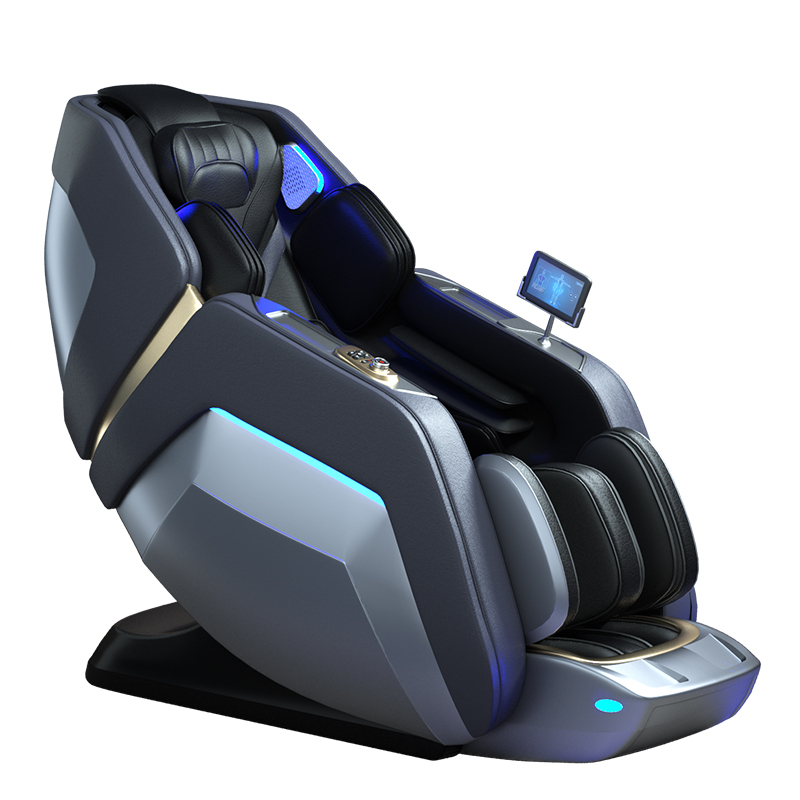
Each recline angle changes how body weight is distributed — check the leg rest, not just the backrest.
The Recline Angle Map: What Each Position Does to Your Body
Not every recline angle serves the same purpose. A shallower angle is comfortable for watching television or scrolling on a phone; a deeper angle is what actually unloads the spine. During a demo, cycle through each stage and notice where the pressure goes — that tells you more than any specification table.
| Recline Position | Approximate Angle | What It Does to the Body |
|---|---|---|
| Upright | 90–100° | Lumbar discs carry most of the upper body weight; paraspinal muscles stay contracted. Fine for short sessions only. |
| Shallow recline | 110–120° | Partial offloading. Comfortable for reading or television; rollers reach the mid and upper back more easily. |
| Zero gravity | 126–128° | Knees at or above heart level. Weight spreads across backrest, seat and leg rest; back muscles release. The position the whole feature is named for. |
| Deep recline / stretch | 130–150° | Maximum decompression. Used with stretch programs where airbags hold the hips while the leg rest extends. |
| Flat / lie-flat | 170–180° | Near-horizontal. Useful for pre-sleep relaxation; not every model supports it. |
Single-Stage, Two-Stage and Infinite Recline: What Changes
Once you accept that the angle matters, the next question is how finely you can control it. Some chairs offer one preset zero gravity position; others let you hold any angle in between. That flexibility matters in a Sonipat household where one person wants a shallow recline after dinner and another wants full decompression before sleep.
Here is the point most buyers miss: it is not just the backrest that has to move. A genuine zero gravity stage moves the backrest and the leg rest together, in proportion, so the knee-to-heart relationship is preserved. A chair that raises the legs independently can leave you in an awkward half-position that loads the hip flexors instead of releasing them.
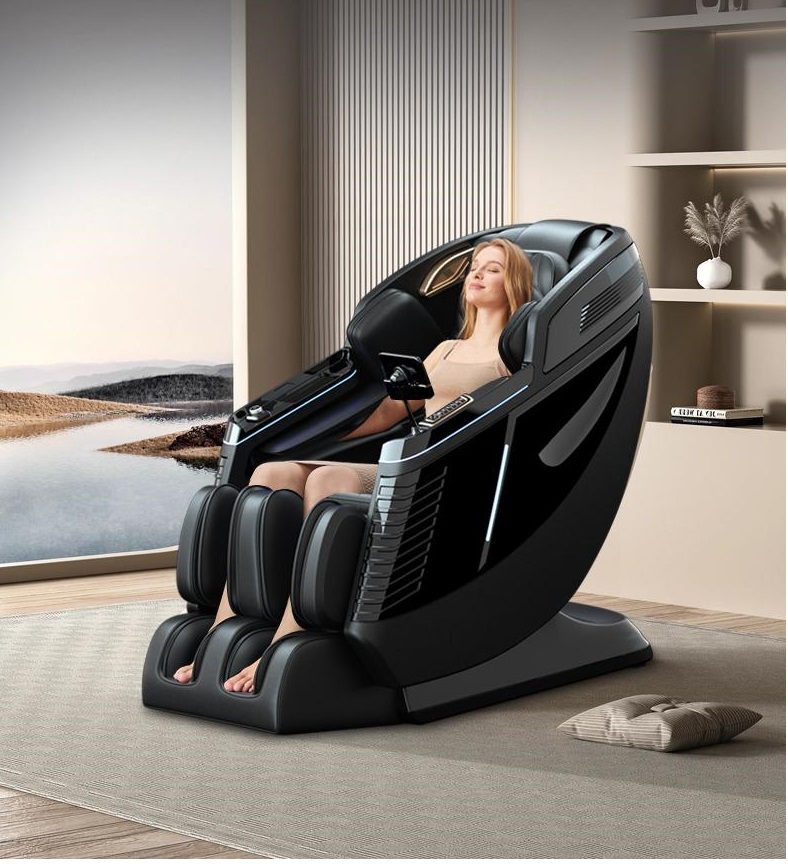
Genuine zero gravity moves the backrest and leg rest together, not independently.
| Recline Type | How It Moves | What It Means in Practice |
|---|---|---|
| Fixed recline | One preset position, often around 45° | Better than an upright sofa, but not true zero gravity. The legs usually stay low. |
| Single-stage zero gravity | One coordinated position at ~126–128° | Genuine neutral posture. Simple, reliable, and enough for most single users. |
| Two-stage zero gravity | Two coordinated presets, typically TV and sleep | Covers the two most common use cases without any guesswork. |
| Three-stage or infinite | Multiple presets plus free positioning | Every user can find an exact angle. Best for shared chairs and variable back comfort. |
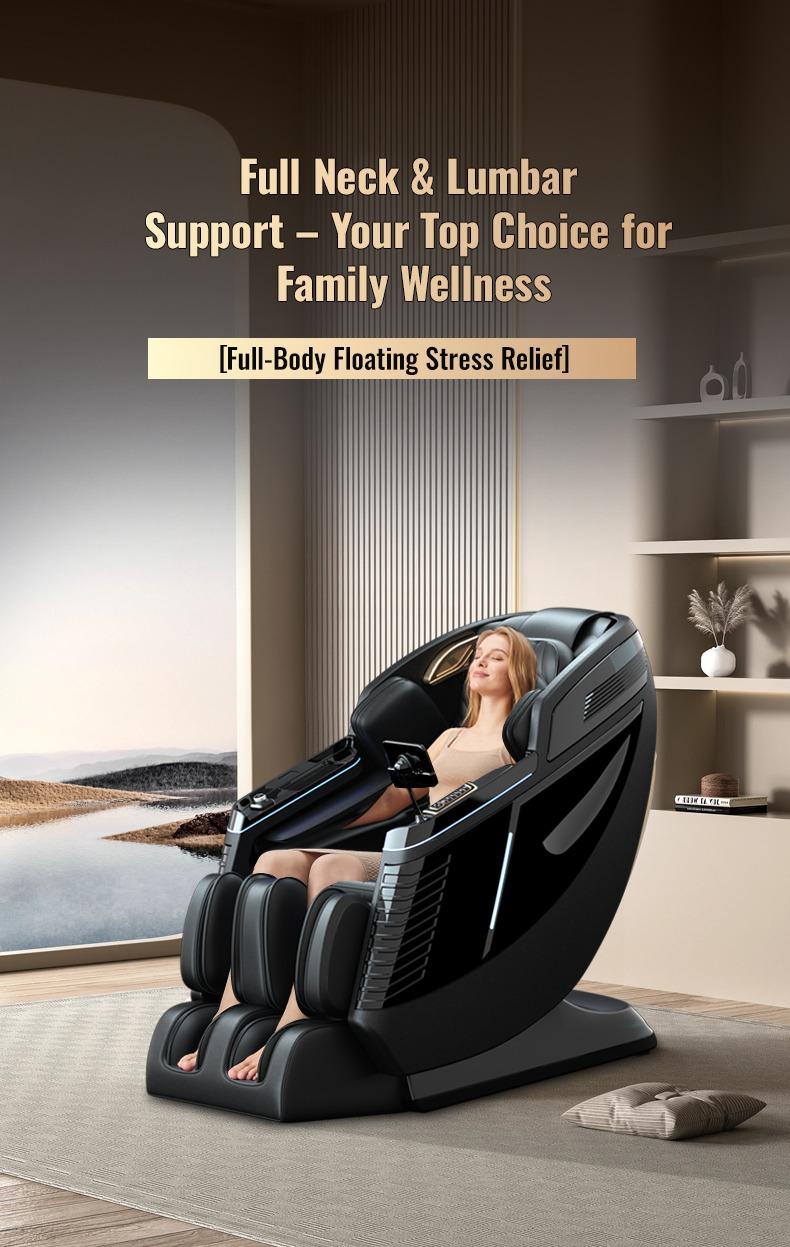
SL-track keeps the spinal S-curve while extending roller reach all the way to the glutes.
Track Geometry and Zero Gravity: How They Work Together
Zero gravity changes the position of the body; the track determines how much of that body the rollers can reach. The two features are complementary, and a chair that gets one right but not the other will always feel incomplete.
When the body reclines, the spinal curve flattens slightly and the glutes drop toward the seat. A long SL-track follows that new geometry, holding the natural S-curve through the thoracic and lumbar region while still reaching down to the glutes and upper hamstrings. A short S-track stops at the waist and leaves exactly the area that sitting compresses the most untouched.
| Track | Coverage | Strength in a Reclined Position | Trade-off |
|---|---|---|---|
| S-Track | Neck to waist, following the spinal curve | Precise contact along the thoracic and lumbar curve | Stops at the waist — glutes and hamstrings untouched |
| L-Track | Neck to glutes and upper hamstrings | Long continuous reach through the lower body | Can flatten along the lumbar curve, reducing support where it is needed most |
| SL-Track | Neck to glutes while holding the spinal S-curve | Full length without sacrificing lumbar contour | Premium specification, so it sits in the higher price bands |
2D, 3D and 4D: What Changes Inside the Roller Head
The mechanism decides how the rollers move, and that decides how the massage feels. In a zero gravity chair the mechanism matters more than usual, because the relaxed posture allows deeper travel — which means the difference between a fixed-depth 2D roller and a genuinely variable 4D head is felt immediately.
A 4D chair does not simply press harder than a 3D chair. It changes how it moves through a stroke, slowing over a tight spot, holding briefly, then moving on. For people with long-standing tightness in the traps or lower back, that variation is what stops the muscle from guarding.
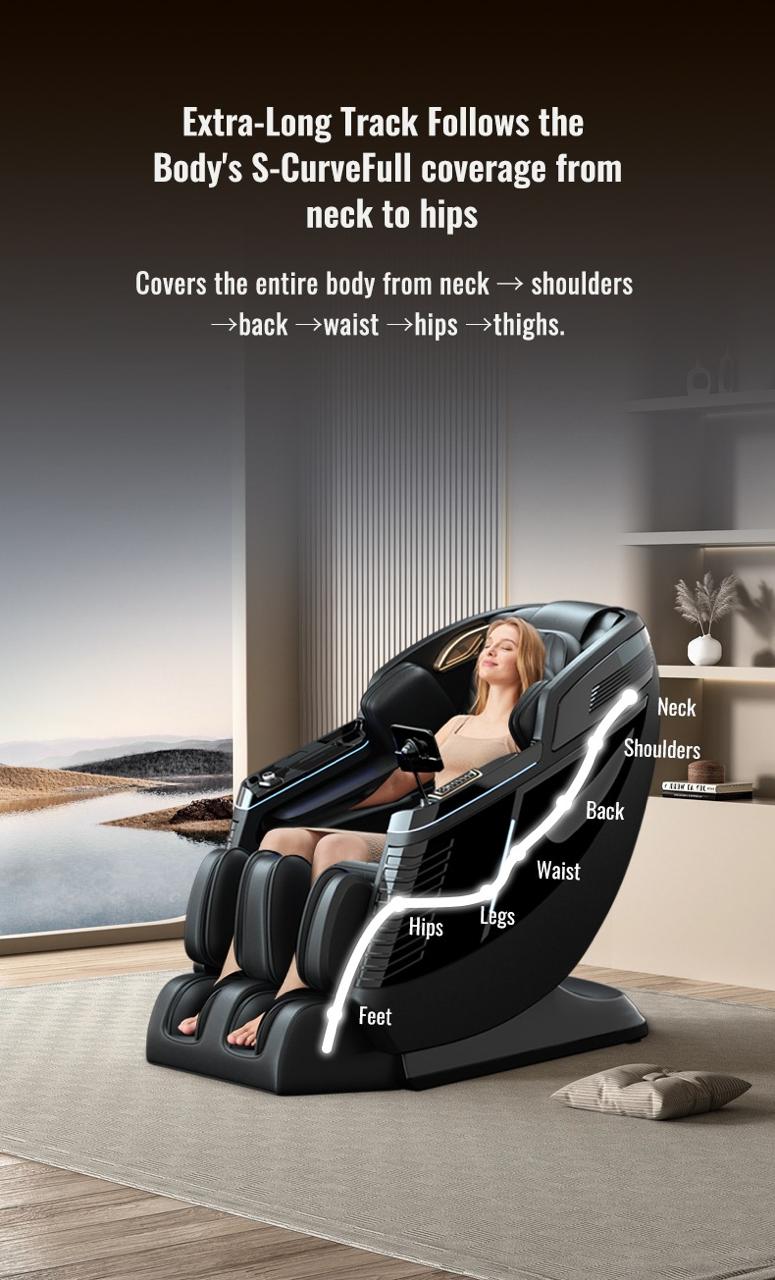
The 4D roller head varies speed and rhythm within a single stroke, not just depth.
| Mechanism | Roller Movement | How It Feels in a Reclined Session |
|---|---|---|
| 2D | Vertical and horizontal only | Surface kneading at a fixed depth; fine for light relaxation, limited for deep tension |
| 3D | Adds inward and outward depth control | You can dial the rollers deeper into muscle; feels closer to thumb pressure |
| 4D | Adds variable speed and rhythm within each stroke | Rollers slow over a knot, hold briefly, then move on — closer to a therapist's hand than a machine |
Automatic Body Scanning: Why Recline Position Depends On It
When the chair reclines, your shoulder line moves. Body scanning uses sensors to locate the shoulder position, spinal curvature and hip placement after the recline begins, then adjusts roller travel to match. Without it, a tall user finds the “neck” program working across the upper back, while a shorter user feels rollers pressing too high.
This matters more than usual in Sonipat households, where a single chair is often shared between two adults of different heights and sometimes with visiting parents. A chair that scans automatically adapts per user; a chair without it forces everyone into an average body map that fits nobody precisely.
The Airbag System: Where Rollers Cannot Reach
Airbags handle the areas rollers cannot: the forearms, the outer hips, the calves and the feet. They work by sequential inflation and deflation, producing a squeeze-and-release rhythm that complements the kneading action of the rollers. In a reclined position, airbags also help hold the body steady so the rollers can work without the torso shifting.
When comparing models, look at the number of airbag zones and whether intensity is adjustable. A chair with five intensity levels can be gentle for a parent and firm after a gym session. A chair with a single on/off setting forces everyone into the same pressure. Also check the arm channels — a proper wrap runs the full length of the forearm rather than clamping only at the wrist.
The Lower-Limb Module: The Half of Zero Gravity That Gets Overlooked
In a zero gravity chair, the leg rest is not an accessory — it is half the feature. It is what raises the knees and completes the neutral posture. Three things matter.
Extendable length. Taller users need the footrest to extend so the knees stay supported rather than dangling. An undersized footrest puts pressure behind the knee and defeats the purpose of the recline entirely.
Calf compression. Sequential calf airbags create a pumping action that helps with the heavy-leg feeling that builds up after long hours of sitting, driving or standing on a factory floor. This is the feature most buyers notice first.
Foot rollers. A triple-roller foot module covers more of the sole than a single roller plate, and adjustable speed lets you keep it gentle. For anyone who walks or stands a lot, this is often the most-used feature in the entire chair.
Lumbar Heat Therapy: A Small Feature With an Outsized Effect
Heat changes how the rest of the session feels. A warmed lumbar pad relaxes the muscles around the lower spine, so the rollers glide rather than catch, and the whole experience feels less clinical. In Sonipat's winters, it also makes the chair far more inviting on a cold morning.
Look for independent heat control so you can run warmth without it dominating the session, and be sensible about duration if you have sensitive skin or circulation concerns. Heat is a comfort layer — it does not replace the mechanical work of the rollers.
Stretch Programs: Where Zero Gravity Earns Its Place
Most people buy a zero gravity chair thinking about the recline, then end up using the stretch program most often. During a stretch sequence, the airbags hold the hips and shoulders in place while the leg rest and backrest move apart, creating a controlled lengthening of the lower back and hip flexors.
For anyone who sits at a desk all day, the hip flexors shorten and pull the pelvis forward — a common contributor to lower back discomfort. A few minutes of stretch work in the evening addresses that in a way that pure roller massage cannot. Without the zero gravity geometry, the stretch simply does not have the range to work.
Auto Programs: What They Actually Change
Auto programs are not just preset timers. Each one adjusts roller speed, depth, airbag pressure, heat and recline angle together. A relaxation program uses slower rollers, moderate depth, softer airbags and a deeper recline; a recovery program increases depth and calf compression; a stretch program sequences airbag holds with leg extension to open the hips and lower back.
Twelve to twenty-four programs is a practical range. Fewer than ten starts to feel limiting once the novelty wears off. More than that is fine, but most users settle on three or four favourites within a month — which is exactly what should happen.
Will a Zero Gravity Chair Fit in a Sonipat Flat?
This is the question we hear most, and it is the right one to ask first. A zero gravity chair needs more depth than an ordinary recliner, because the whole body moves backward and the leg rest projects forward. Most models require roughly 170–190 cm of depth from the wall when fully reclined, though space-saving designs cut that requirement significantly by sliding the seat forward as the backrest tilts.
Sonipat's housing stock varies a great deal — a builder floor near Atlas Road has different constraints from a group housing flat in Sector 15, and an independent house in Model Town is different again. Rather than guessing from a dimension chart, we measure your intended spot during the home demo and demonstrate the full recline in that exact position. If the room is tight, we shortlist compact models or suggest an alternative corner. This single step prevents most of the regret that follows an online-only purchase.
Getting the Chair Into Your Building: Lifts, Doors and Staircases
Sonipat buildings range from new high-rise towers in Sector 15 and along the Kundli corridor with dedicated service lifts to older colony houses near Subhash Chowk where the only route in is a narrow staircase. A massage chair arrives in a large, heavy crate, so before dispatch we confirm three measurements: the service lift internal dimensions, the main door width, and the turning space between the entrance and your room.
If the crate will not clear a lift, we plan a staircase route or arrange unpacking at ground level and carry the chair in by its frame. Some societies and group housing blocks also require prior delivery permission or a gate pass, so it helps to check with your RWA or facility desk in advance. A ten-minute conversation before delivery day saves hours of improvisation on the day itself.
Power, Stabilisers and Sonipat's Voltage Fluctuations
A massage chair runs on a standard domestic socket, but the electronics are sensitive to voltage swings. Many manufacturers recommend a 1000 VA stabiliser, and we recommend it too — a control board replacement costs far more than the stabiliser. This is especially relevant in older Sonipat colonies where supply can be inconsistent, and in mixed-use buildings along the main roads.
Check that the socket you plan to use is earthed and that the chair is not sharing a circuit with a heavy appliance. If your home has an inverter or UPS backup, confirm the chair's load is within its capacity before assuming it will run during a power cut.
Upholstery and Build: What Survives a Sonipat Year
Sonipat puts upholstery through a punishing cycle — dusty summers, a humid monsoon, and a dry, cold winter. Breathable synthetic leather handles that well: it wipes clean, resists moisture and does not hold dust the way fabric does. Premium fabric feels softer but needs more attention, particularly during the dust season.
During your demo, press into the seat and backrest to judge foam density, and listen for creaks when the chair is fully reclined. A well-built chair stays rigid under load. Airbags should inflate smoothly and evenly, and the rollers should travel without jerking or stalling at any point along the track.
How Loud Is a Massage Chair in a Sonipat Home?
Louder than most buyers expect from the showroom, quieter than they fear. The dominant sounds are the air pump cycling and the roller motor under load — roughly comparable to a quiet conversation. In an open-plan living room this is unremarkable; in a compact flat with thin walls, an evening session can be audible in the next room.
Ask to hear the chair with the airbags running at maximum, not just the rollers at low speed. That is the loudest the machine will ever be, and it is the honest test.
What Regular Zero Gravity Sessions Can Realistically Do For You
Take the load off the lower back
Sitting compresses the lumbar discs and keeps the surrounding muscles in a low-grade state of contraction. A reclined zero gravity position redistributes that load across the backrest, seat and leg rest, and the roller work then has a chance to loosen tissue that would otherwise stay guarded. Most users describe it as putting down a weight they did not realise they were carrying.
Ease upper-back and shoulder tightness
Laptop posture rounds the shoulders forward and tightens the chest. Track coverage that reaches the cervical and thoracic region, combined with shoulder airbags, works on the muscles that pull the upper back out of alignment. The chair cannot strengthen anything, but it can reduce the tightness that keeps you stuck in a bad position.
Reduce the heavy-leg feeling
Elevation plus sequential calf compression encourages blood to return from the lower legs. In a district where long commutes to Delhi and Gurugram are the norm, this is often the benefit people notice fastest — usually within the first week.
Stress, Sleep and the Evening Ritual
A supported recline with gentle pressure tends to shift the nervous system out of its alert state. That is why so many users feel drowsy fifteen minutes into a session. It is not a sedative effect — it is simply the body stopping the work of holding itself upright.
For commuters and high-pressure roles, a 15-minute session before bed can become the marker that separates the working day from the rest of the evening. It does not fix sleep hygiene on its own, but it removes one common obstacle: physical tension that will not switch off.
Recovery After Training, Travel and Long Weeks
Sonipat has a growing running, cycling and gym culture — from the roads around Murthal to the fitness centres along the GT Karnal corridor — and recovery is usually the part that gets skipped. After a long run or a heavy session, the calves and lower back are tight and the hips are compressed. A gentle program with leg elevation and calf compression helps restore range of motion before the next workout.
The same applies after a flight or a long drive. It is not a substitute for moving around, but it shortens the time it takes to feel normal again.
Who Gets the Most Out of a Zero Gravity Chair in Sonipat?
Corporate & IT Professionals
Long desk days — whether in a local office or on a daily commute to Delhi and Gurugram — tighten the chest, traps and hip flexors. Zero gravity plus SL-track coverage targets exactly that pattern.
Daily Commuters
Long drives and shared cabs compress the lower back and tire the legs. Recline and calf compression help reverse the day's sitting load.
Runners & Gym-Goers
Post-training recovery is easier when the lower body is elevated and compressed. A gentle flush session reduces stiffness before the next workout.
Parents & Older Adults
Gentle heat, low-intensity airbags and a supported zero gravity recline make daily relaxation comfortable. Consult a doctor first if there are medical concerns.
Entry, Mid-Range and Premium: What Actually Changes
Price tiers are not just about brand names. They map to real mechanical differences, and in a zero gravity chair the recline mechanism itself is one of the places where the difference shows up. Here is what typically separates the three bands we supply.
| Feature | Entry | Mid-Range | Premium |
|---|---|---|---|
| Mechanism | 2D or basic 3D | 3D with depth control | Genuine 4D with variable rhythm |
| Track | S-track | L-track or short SL-track | Full SL-track |
| Zero gravity stages | Fixed recline | Single or two-stage | Three stages or infinite positioning |
| Body scanning | Basic or none | Automatic shoulder detection | Full shoulder and spinal mapping |
| Airbag zones | 3–4 zones | 5–6 zones | 7+ zones with intensity levels |
| Foot module | Vibration only | Single roller | Triple rollers with speed control |
| Heat | Often absent | Lumbar heat | Independent lumbar heat control |
Typical Specifications of the Zero Gravity Chairs We Supply
Exact specifications vary by model. The ranges below describe the class of chairs available through LVS Massager in Sonipat.
| Feature | Typical Range |
|---|---|
| Massage mechanism | 3D or genuine 4D |
| Track | SL-track, approximately 130–145 cm of roller travel |
| Zero gravity recline | 126–128° neutral posture, 2–3 motorised stages |
| Body scanning | Automatic shoulder and spinal mapping |
| Airbag coverage | Shoulders, arms, hips, calves and feet |
| Heat therapy | Lumbar heating pad |
| Foot module | Reflexology rollers with adjustable intensity |
| Auto programs | 12–24 presets |
| Controls | Remote, touchscreen or voice, depending on model |
| Upholstery | Breathable synthetic leather or premium fabric |
| Recommended stabiliser | 1000 VA |
Buying Locally vs. Buying From an Online Listing
An online listing can show you a photograph and a specification table. It cannot tell you whether the recline angle actually reaches neutral posture, whether the airbags will fit your shoulders, or whether the crate will clear your staircase. Those three questions decide whether you end up using the chair every day or parking it in a corner.
| Factor | LVS Massager (Local Supplier) | Online-Only Listing |
|---|---|---|
| Try before buying | ✔ Showroom visit and home demo | ✘ Usually not possible |
| Recline assessment | ✔ Demonstrate full zero gravity in your room | ✘ Based on listed angles |
| Fit assessment | ✔ Measured in your actual space | ✘ Based on listed dimensions |
| Delivery into the flat | ✔ Planned around lifts, doors and stairs | Varies; often kerbside |
| Installation | ✔ Professional setup and functional check | Often self-assembly |
| Warranty coordination | ✔ Handled locally | Call-centre dependent |
| Ongoing relationship | ✔ Same team for years | Transactional |
The Free Home Demo: What Happens During the Visit
We bring the chair to you, for serious buyers within our Sonipat service area. The visit typically runs like this: we identify the intended position, measure the wall clearance, and demonstrate the full zero gravity recline in that exact spot. Then you sit in the chair, cycle through the programs, and adjust the intensity until it suits you.
Family members are encouraged to try it too — if a chair will be shared, the shortest and tallest users in the house should both test the footrest extension and shoulder airbag fit. There is no obligation to buy; the point of the visit is to replace guesswork with experience.
Delivery and Installation Across Sonipat
On delivery day, our team brings the chair in, positions it where you want it, levels it, and runs a complete functional check across every program before handing over. We then walk you through the remote or touchscreen, set up a starting program, and explain the stabiliser requirement.
We schedule deliveries by slot so you are not waiting through an entire day. If your society or group housing block restricts delivery timings or requires a gate pass, tell us in advance and we will plan around it.
Warranty, Service Requests and Annual Maintenance
Warranty on massage chairs in India generally runs from one to two years against manufacturing defects, with some premium models extending coverage on motors and frames. What matters more than the headline number is how a claim actually gets handled.
We explain exactly what your chosen model covers and what it does not, help you raise service requests, and coordinate with the brand's service partner so you are dealing with one point of contact rather than a queue. Where an Annual Maintenance Contract is available, we will tell you whether it is worth the cost for your usage pattern — and where it is not.
Our Sonipat Service Area
Our base is at Ghitorni on M.G. Road, on the Delhi side of the border and a straightforward drive from Sonipat via the NH-44 and Outer Ring Road. From there we deliver, install and support customers across Sonipat district and the surrounding NCR belt.
| Zone | Key Localities We Serve | Demo & Delivery |
|---|---|---|
| Central Sonipat | Model Town, Subhash Chowk, Civil Lines, Atlas Road, Rohtak Road, Old D.C. Road, Mission Chowk, Ansal Chowk, Jat School Road | ✔ Same-week demo |
| Sonipat Sectors | Sector 12, Sector 14, Sector 15, Sector 23, Sector 26, Sector 27, Sector 35, Sector 38, Sector 61 | ✔ Scheduled delivery |
| South Sonipat | Murthal, Bahalgarh, Rai, Barhi, Kundli, TDI City Kundli, Narela border belt | ✔ Same-week demo |
| North & East Sonipat | Ganaur, Bicpura, Kharkhoda, Badh Malak, Bhainswan, Jharot, Bhatgaon | ✔ Scheduled delivery |
| West Sonipat | Gohana, Kathura, Mundlana, Lakhan Majra, Meham Road belt | ✔ By appointment |
| Housing Societies | Sushant City, Omaxe City, TDI City Kundli, Sector 15 group housing, Model Town builder floors, Rai and Kundli residential projects | ✔ Same-week demo |
| NCR Border Belt | Kundli, Narela, Bawana, Alipur, Jindal Global University area, GT Karnal Road corridor | ✔ Scheduled |
Not sure whether your locality is covered? Send us your pin code on WhatsApp and we will confirm the nearest demo slot.
Frequently Asked Questions
What does zero gravity actually mean on a massage chair?
Zero gravity is a recline geometry modelled on the neutral body posture studied in spaceflight. The backrest and leg rest move together until the torso and thighs sit at roughly 126 to 128 degrees and the knees are at or above heart level. In that position body weight spreads across the backrest, seat and leg rest rather than stacking through the lumbar discs, which lets the back muscles release before the rollers start working.
Is zero gravity a real feature or just a label?
It is real, and it changes the massage noticeably. Sitting upright keeps the paraspinal muscles contracted just to hold the torso up, so rollers have to push through that guarding. In a true zero gravity position those muscles relax, and the same roller depth reaches deeper tissue with far less discomfort. It is also the reason many users feel sleepy within fifteen minutes.
What recline angle should I check in a zero gravity chair?
Look for approximately 126 to 128 degrees between the torso and the thighs, with the leg rest raised until the knees are level with or above the heart. A chair that only tilts the backrest to 45 degrees and leaves the legs low is a recliner, not a zero gravity chair. During a demo, watch the leg rest height rather than the backrest angle.
Do zero gravity chairs need more floor space than ordinary chairs?
Usually yes. A fully reclined zero gravity chair projects further from the wall, often around 170 to 190 cm of depth. Space-saving models reduce this by sliding the seat forward as the backrest tilts. In Sonipat's builder floors and group housing flats, we measure the real wall clearance during the home demo instead of trusting a specification sheet.
Will a zero gravity massage chair fit in a Sonipat flat or builder floor?
In most cases yes, provided the model is chosen around the room. Compact and space-saving designs need noticeably less depth. During the home demo we measure your intended corner and run the full recline in that exact spot, which tells you more than any dimension chart.
Do you deliver and install in Sonipat high-rises and older colony houses?
Yes. We deliver across Model Town, Sector 14, Sector 15, Atlas Road, Murthal, Kundli, Rai, Bahalgarh and the surrounding blocks. Before dispatch we confirm the service lift dimensions, the main door width and the turning space between the lift lobby and your room. Where there is no usable service lift, we plan a staircase route or arrange unpacking at ground level.
What is the practical difference between a 3D and a 4D mechanism?
A 3D mechanism moves the rollers up and down, side to side and in and out, so you control depth. A 4D mechanism adds variable speed and rhythm inside a single stroke, so the rollers can slow over a tight spot, hold briefly and then move on. For long-standing tightness in the shoulders or lower back, the 4D variation feels closer to a therapist's hand.
How long should a zero gravity session last?
Most manufacturers suggest 15 to 30 minutes per session, once or twice a day. Start with a gentle 15-minute relaxation program at low intensity and increase only once your body adapts. Longer high-intensity sessions tend to leave muscles sore rather than refreshed.
Do you offer a free home demo in Sonipat?
Yes. We offer a free home demonstration for serious buyers within our Sonipat service area. You can test the zero gravity recline, compare roller depth between models and confirm the chair fits your room before deciding. Call or WhatsApp us with your locality and preferred time slot.
Is a zero gravity massage chair safe if I have a medical condition?
Massage chairs suit healthy adults well but are not appropriate for everyone. Consult a doctor before use if you are pregnant, wear a pacemaker or any implanted electronic device, have osteoporosis or a recent fracture, have a history of blood clots, or are managing a diagnosed spinal condition. Tell us about any condition during the demo so we can show you which programs and intensities to use and which to avoid.
A Simple Framework for Choosing Your Chair
There is no universally best chair. There is only the chair that suits your body, your room and the way you will actually use it. Work through these five questions in order.
- Where is the tension? Neck and shoulders point you toward strong upper-track coverage and shoulder airbags. Lower back and legs point you toward a longer SL-track, a serious calf module and a genuine zero gravity recline.
- Who else will use it? Two adults of different heights make automatic body scanning close to essential. A single user can compromise on it.
- How much floor space do you have? Measure the wall clearance for a full recline before you fall in love with a model. Space-saving designs exist for a reason.
- How often will you use it? Daily use justifies a higher tier with better build quality. Occasional use does not.
- Who will service it? Confirm that local support exists before you pay, not after something goes wrong.
Five Mistakes Buyers Make When Choosing a Zero Gravity Chair
1. Trusting the "zero gravity" label without checking the legs
If the leg rest does not rise to knee-to-heart level, the recline is not neutral posture. Check the legs, not just the backrest.
2. Skipping the room measurement
A chair that cannot fully recline in your room is a chair you will stop using. Measure first, shortlist second.
3. Buying on feature count alone
Twenty programs and three colours mean nothing if the track is short. Prioritise track, mechanism and recline geometry over the length of the feature list.
4. Ignoring the delivery route
A chair stuck in a lobby because the service lift is too small is a problem nobody wants on delivery day. Confirm the route beforehand.
5. Forgetting the stabiliser
Voltage fluctuation is the most common cause of avoidable electronics failure in the NCR belt. A 1000 VA stabiliser is cheap insurance.
Myths Worth Clearing Up
Myth: “Zero gravity means the chair floats or lifts off the floor.”
Reality: Nothing floats. The name describes the body's position, not the machine's. The chair stays firmly on the floor while your body is arranged into a posture where gravity's load is distributed rather than stacked.
Myth: “Any reclining chair is a zero gravity chair.”
Reality: Reclining the backrest alone does not create neutral posture. The legs must rise as well, or the pelvis stays rotated and the hip flexors stay shortened.
Myth: “More expensive always means more effective.”
Reality: A well-matched mid-range chair will serve you better than a premium chair that does not fit your body or your room. Match matters more than price band.
Myth: “A massage chair can replace physiotherapy.”
Reality: It is a wellness and relaxation tool. It can support recovery, but it does not diagnose or treat conditions. Persistent or worsening pain needs a clinician, not a chair.
How to Build a Routine You Will Actually Keep
Most people overestimate how long they will spend in a massage chair. A realistic routine is 15 to 20 minutes in the evening, three to five times a week, using a relaxation or stretch program at moderate intensity. That is enough to notice a difference and light enough that you will keep doing it.
For first-time users, begin with a stretch program at low intensity for the first week. Add heat once you are comfortable with the roller action. Save the deeper recovery programs for days when you have trained hard or spent an unusually long time at a desk.
Safety Notes Before You Buy
Massage chairs suit healthy adults well, but they are not for everyone. Speak to a doctor before use if you are pregnant, wear a pacemaker or any implanted electronic device, have osteoporosis or a recent fracture, have a history of blood clots, or are managing a diagnosed spinal condition. Children should not use the chair unsupervised.
If you have a specific concern, raise it during the demo. We would rather show you which programs to avoid than have you discover it afterwards.
Massage Chair vs. Manual Therapy: Different Jobs
| Aspect | Zero Gravity Massage Chair | Manual Therapy |
|---|---|---|
| Main purpose | Daily relaxation, recovery and tension relief | Assessment, diagnosis and targeted treatment |
| Availability | At home, on your schedule | By appointment, with travel time |
| Customisation | Programs, intensity levels, recline stages, body scanning | Individualised clinical plan |
| Best for | Maintenance and stress reduction | Injury, chronic pain, post-surgical rehab |
The two are complementary. A chair handles the daily maintenance; a professional handles the clinical problems. Neither replaces the other.
Simple Habits That Extend Chair Life
- Use a 1000 VA stabiliser. It protects the control board and motors from voltage swings.
- Keep the chair dry. Avoid placing it near open windows or damp walls; wipe spills immediately, especially during the monsoon.
- Block direct sunlight. Prolonged UV exposure fades and cracks upholstery faster than anything else.
- Clean gently. A soft damp cloth and mild upholstery cleaner are enough. Skip abrasive chemicals.
- Book an annual check. A basic inspection catches worn rollers and airbag issues before they become expensive.
How the Buying Process Works
- Conversation. Call or WhatsApp with your requirements, your locality, and roughly how much space you have.
- Demo. Visit the showroom or book a free home demo in Sonipat.
- Shortlist. We recommend two or three models based on your body, room and primary needs.
- Delivery and installation. We schedule a slot and set the chair up in your home.
- After-sales. We stay your local contact for warranty coordination, service requests and care advice.
Payment and Financing
We accept standard payment methods and can advise on EMI or financing options through participating partners, subject to eligibility. Because pricing changes with model, configuration and current availability, we do not publish prices on this page. Contact us for a current quote tailored to the specific chair you are considering.
Energy Use and Running Cost
A massage chair is not a heavy appliance. A typical 20-minute session uses far less electricity than an air conditioner running for the same time. Consumption varies with the model and which features are active — heat and air pumps draw more than rollers alone — but for daily household use the impact on your bill is modest.
The stabiliser recommendation is about protection, not consumption. Voltage fluctuation, not power draw, is what damages these machines.
Why the Value Comes From Consistency, Not Intensity
A massage chair earns its price through frequency of use, not through any single remarkable session. Fifteen minutes on a Tuesday evening, repeated for two years, does more for your back than one long session every few months. That is why fit matters so much — the chair you will actually sit in every day is worth more than the chair with the longer feature list.
For Sonipat residents whose schedules leave little room for appointments and cross-city travel, having the chair at home removes the biggest obstacle to a consistent routine: the effort of going somewhere.
Book a Free Zero Gravity Massage Chair Demo in Sonipat
Speak to a specialist zero gravity massage chair supplier for Sonipat. We will help you compare models, check the fit in your room, and choose a chair that suits your body and your home.
📍 Shop No. 415, Metro Pillar No. 124, M.G Road, Ghitorni, New Delhi – 110030
📞 +91 97118 58682 |
✉️ vasu.livinsedia@gmail.com